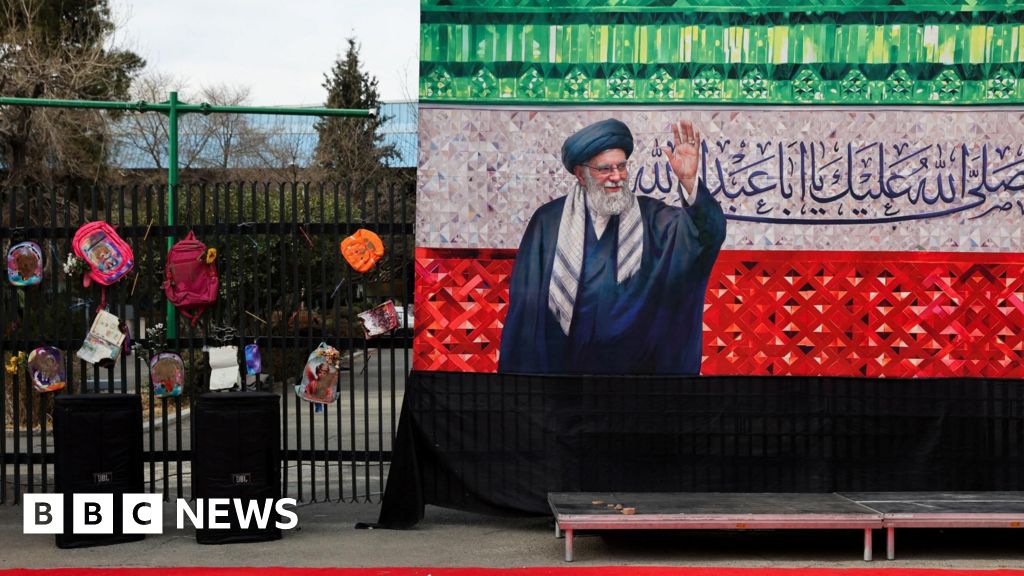
Iran Delays Khamenei Funeral Amid Intense US-Israeli Bombardment
In a dramatic development that underscores the escalating tensions in the Middle East, Iran has announced the postponement of the state funeral for its recently deceased Supreme Leader, Ayatollah Ali Khamenei. Originally scheduled to be a grand three-day event commencing today, the deferral comes amidst a backdrop of relentless US and Israeli military strikes across Iranian territory, profoundly impacting the nation's ability to conduct such a significant public ceremony.
The news of the iran funeral postponed has sent ripples of uncertainty through the region, intensifying focus on Iran's internal stability and its response to external pressures. While official reports cite logistical challenges and overwhelming public demand as the primary reasons, observers are keenly aware that the ongoing conflict forms an inescapable and critical context for this unprecedented decision.
Official Reasons: Infrastructure and Overwhelming Public Demand
According to Iranian state media, the state funeral of Ayatollah Ali Khamenei, who held the highest authority as Iran's spiritual leader for decades, has been officially postponed due to logistical considerations. Seyyed Mohsen Mahmoudi, the head of the Islamic Propaganda Co-ordination Council of Tehran province, stated that the decision was made because of "the high volume of requests to attend this ceremony and the need to provide appropriate facilities to host the people."
The funeral was set to begin on Wednesday night (22:00 local time / 18:30 GMT) at Tehran's Grand Mosalla prayer complex, a massive venue designed to accommodate large gatherings. However, organizers reported that the necessary infrastructure arrangements were not fully completed to handle the anticipated throngs of mourners. The original plan involved a three-day period during which the public could pay their respects as the late leader lay in state. A new date for the funeral has not yet been announced, leaving a critical national event in limbo. While the official explanation focuses on practicality, the sheer scale of organizing a state funeral for a figure of Khamenei's global and national stature is undeniably immense, requiring meticulous planning and extensive resources, even in more stable times.
A Nation Under Fire: The Shadow of Escalating Conflict
Beneath the official narrative of logistical hurdles lies a far more urgent and perilous reality: Iran is currently reeling from sustained US and Israeli bombardment. Ayatollah Ali Khamenei himself was tragically killed in a strike at his compound in Tehran at the outset of the US and Israeli assault on Saturday. This attack also claimed the lives of his wife, one of their adult sons, and several top officials, including a member of the Assembly of Experts, highlighting the devastating precision and scope of the ongoing strikes.
The intensity of these military actions has created a volatile and dangerous environment across the country. Iran has responded fiercely, launching its own missiles and drones at Israel and Gulf states hosting US military bases, signaling a dangerous tit-for-tat escalation. This conflict has far-reaching consequences, extending beyond immediate casualties to impact daily life, including widespread "travel chaos" and "Gulf airspace closures" that have disrupted international flights. In such a high-stakes and insecure atmosphere, holding a massive public gathering like a state funeral becomes not only logistically complex but potentially perilous, both for attendees and for the national leadership present. The decision to postpone, therefore, can be seen as a pragmatic response to an active war situation, prioritizing national security and public safety over ceremonial protocol.
The Succession Scramble: Picking the Next Supreme Leader Amidst Crisis
The death of Ayatollah Ali Khamenei has immediately triggered the intricate process of selecting Iran's next Supreme Leader, a decision of immense consequence for the nation's future, especially during wartime. The responsibility falls to the Assembly of Experts, a clerical body comprising 88 members, who are theoretically elected by Iranians every eight years. However, Khamenei historically ensured that these members were primarily conservatives aligned with his guidance, thus maintaining control over the succession process.
A member of the Assembly of Experts, Ayatollah Ahmad Khatami, confirmed that the body was "close" to choosing a successor. He told state TV that candidates had already been identified, though he refrained from naming them. Crucially, Khatami acknowledged the severity of the situation, stating, "The supreme leader will be identified in the closest opportunity, we are close to a conclusion. However, the situation in the country is a war situation." This acknowledgment underscores the pressure on the Assembly to make a swift yet considered choice under extraordinary circumstances. Reports from Iranian sources suggest that another of Khamenei's sons, Mojtaba, is currently considered a front-runner to succeed his father. The postponement of the funeral might also subtly serve to provide the Assembly of Experts with additional time and a less frantic environment to deliberate on such a critical decision, away from the immediate public gaze and potential for disruption. For a deeper understanding of the dual pressures driving this postponement, you can read more at Why Iran Postponed Khamenei's Funeral: Infrastructure & Succession.
Public Sentiment: Grief, Defiance, and Dissent
The public reaction to Khamenei's death and the subsequent bombardment has been deeply polarized. State media has consistently shown images of crowds of the Islamic Republic's supporters protesting in Tehran against the US and Israeli attacks, portraying a united front of national defiance and mourning. These demonstrations serve to galvanize support for the regime during a crisis.
However, social media videos paint a more complex picture, showing opponents of the regime celebrating on the streets in the capital and other cities. This reflects a deep-seated discontent with Khamenei's autocratic rule. Throughout his tenure since 1989, Khamenei maintained a firm grip on Iran's politics and armed forces, brutally suppressing challenges to the ruling system. Human rights groups estimate that at least 6,480 people were killed during nationwide protests in late December and early January under his command. The postponement of a state funeral could also be a strategic move to manage and potentially mitigate any potential unrest or public demonstrations that might arise during such a high-profile event, especially if opponents sought to use it as a platform for dissent.
Broader Ramifications: Regional Instability and Global Impact
The decision to postpone Khamenei's funeral, while seemingly an internal matter, carries significant broader ramifications for regional stability and global affairs. The continued US and Israeli bombardment, coupled with Iran's retaliatory strikes, has plunged the Middle East into an even deeper state of uncertainty. The "Gulf airspace closures" and widespread "travel chaos" are immediate, tangible consequences impacting international commerce and everyday lives.
The region is bracing for potential further escalation, with implications for global oil markets, international diplomacy, and the fragile balance of power. For individuals and businesses with interests in the region, it is paramount to monitor news outlets and official government advisories closely. Airlines and shipping companies operating in or through the Middle East should be prepared for ongoing disruptions and reassess routes as necessary. The potential for miscalculation and rapid escalation remains high, making constant vigilance and updated information critical for all stakeholders. The ripple effects of this conflict extend far beyond Iran's borders, reminding the international community of the interconnectedness of global security. To understand the wider geopolitical implications of this critical development, delve deeper into Khamenei Funeral Postponement: Impact of Escalating Iran Conflict.
Conclusion
The postponement of Ayatollah Ali Khamenei's state funeral is a decision born out of a confluence of logistical challenges and, more significantly, the intense geopolitical crisis engulfing Iran. While official statements highlight the need for infrastructure and accommodating vast crowds, the undeniable backdrop of relentless US and Israeli bombardment dictates a context of national emergency. This deferral provides not only a pause for practical preparations but also crucial breathing room for the Assembly of Experts to deliberate on the next Supreme Leader during an unprecedented "war situation." As Iran navigates this period of mourning, conflict, and transition, the world watches with bated breath, recognizing that the decision for the iran funeral postponed is a stark indicator of the precarious state of regional and international affairs.